The Art of Water: How Private Aquatic Masterpieces Transform Dubai's Luxury Pools
When a Swimming Pool Becomes a Canvas
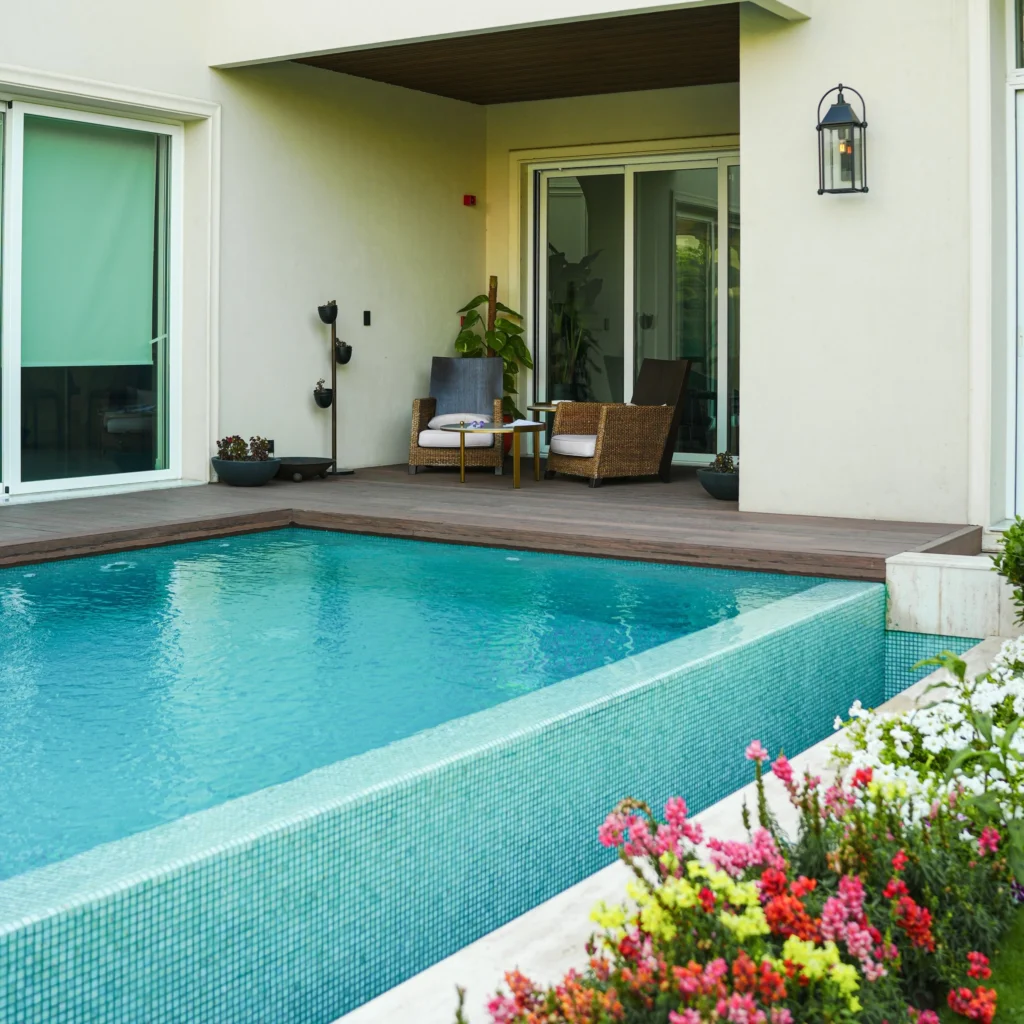
In Dubai, where luxury is often measured in square meters and floor-to-ceiling windows, the swimming pool has quietly evolved into something far more personal. The shift from a standard blue rectangle to a custom mosaic-lined basin did not happen overnight, but it has become one of the most telling signs of a truly bespoke property. What was once a functional amenity is now a statement piece, and at the heart of that transformation are the materials and craftsmanship that turn water into an art form. These are the private aquatic masterpieces that define the city's most exclusive residences.
The Craft of Mosaic: More Than Just Tiles
Mosaic work in pools is not the same as laying a kitchen backsplash. The materials must endure constant chemical exposure, UV light, and thermal expansion, all while maintaining their color and bond. That is why the industry has gravitated toward glass and ceramic tiles from houses like Bisazza, Sicis, and Trend Group. These manufacturers produce small-format tiles with fired-in pigments that resist fading and chemical etching. A pool lined with their product does not just look beautiful; it stays that way for years.
Bertazzon Mosaico, another name that surfaces in high-end projects, brings a distinctly Italian sensibility to the craft. Their handmade smalti tiles catch light in unpredictable ways, creating depth that machine-made tiles cannot replicate. Similarly, Vismara Mosaico and Palombini offer collections that range from geometric patterns to free-form organic shapes, giving designers a vocabulary to work with. When a client wants a pool that mirrors the ocean floor or evokes a Moorish garden, these are the go-to sources.
The installation process itself demands a different level of precision. Each tile is set by hand, often on mesh backing or directly into thin-set mortar. The grout lines must be consistent, and the substrate must be perfectly flat. A poorly prepared base will telegraph every imperfection through the finished surface. That is why reputable ateliers spend as much time on the prep work as on the tile layout. The result is a surface that feels seamless underfoot and looks like a single piece of art when viewed from above.
How Material Choices Shape the Pool's Character
Not all glass tiles are equal. Bisazza, for instance, uses a high-lead-content glass that gives their tiles a brilliant, almost liquid finish. Sicis leans into geometric precision, offering patterns that can be scaled up or down to fit any pool dimension. Trend Group focuses on iridescent finishes that shift color with the sun's angle. Each brand brings a different character, and the choice often comes down to the effect the designer wants to achieve.
Ceramic tiles from Cedit Ceramiche, Casalgrande Padana, and Marazzi offer a more matte, natural look. They work well in pools that aim to mimic natural rock pools or lagoon settings. Ragno and Porcelanosa produce porcelain tiles that are extremely durable and low-porosity, making them ideal for the harsh pool environment. The trade-off is that porcelain does not catch light the same way glass does, so the visual impact is subtler. For a private aquatic masterpieces, the decision between glass and ceramic is one of mood as much as maintenance.
Then there are the larger-format tiles from Aparici and Onix. These are less common in pools because large tiles require perfectly flat substrates and can be prone to lippage. But when done right, they create a clean, monolithic look that appeals to minimalists. The risk is that any imperfection in the pool shell becomes visible, so the margin for error is slim.
Lessons from Landmarks: What Public Projects Teach Us
The Burj Al Arab and the Palace of Versailles may seem worlds apart, but both demonstrate what is possible with mosaic at scale. The Burj Al Arab uses gold-leaf mosaics that reflect the desert sun, while Versailles' fountains are lined with stone and marble mosaics that have survived centuries. In Dubai, the Dubai Canal and the Palm Jumeirah's public spaces show how water and tile interact under intense sunlight and heavy use. The key takeaway for private projects is that durability and beauty must coexist. A pool that looks stunning but requires constant regrouting or color correction is not a masterpiece; it is a maintenance headache.
Yas Island in Abu Dhabi offers another reference point. Its public pools and water features use a mix of glass and ceramic mosaics designed to withstand high traffic and strong chemical treatments. Private pools, by contrast, do not face the same foot traffic, but they often sit under direct sunlight for longer periods. That makes UV stability a priority. Tiles from Mozaico and Artitalia, for instance, are formulated to resist color shift even after years of exposure.
Designing for the Eye and the Body
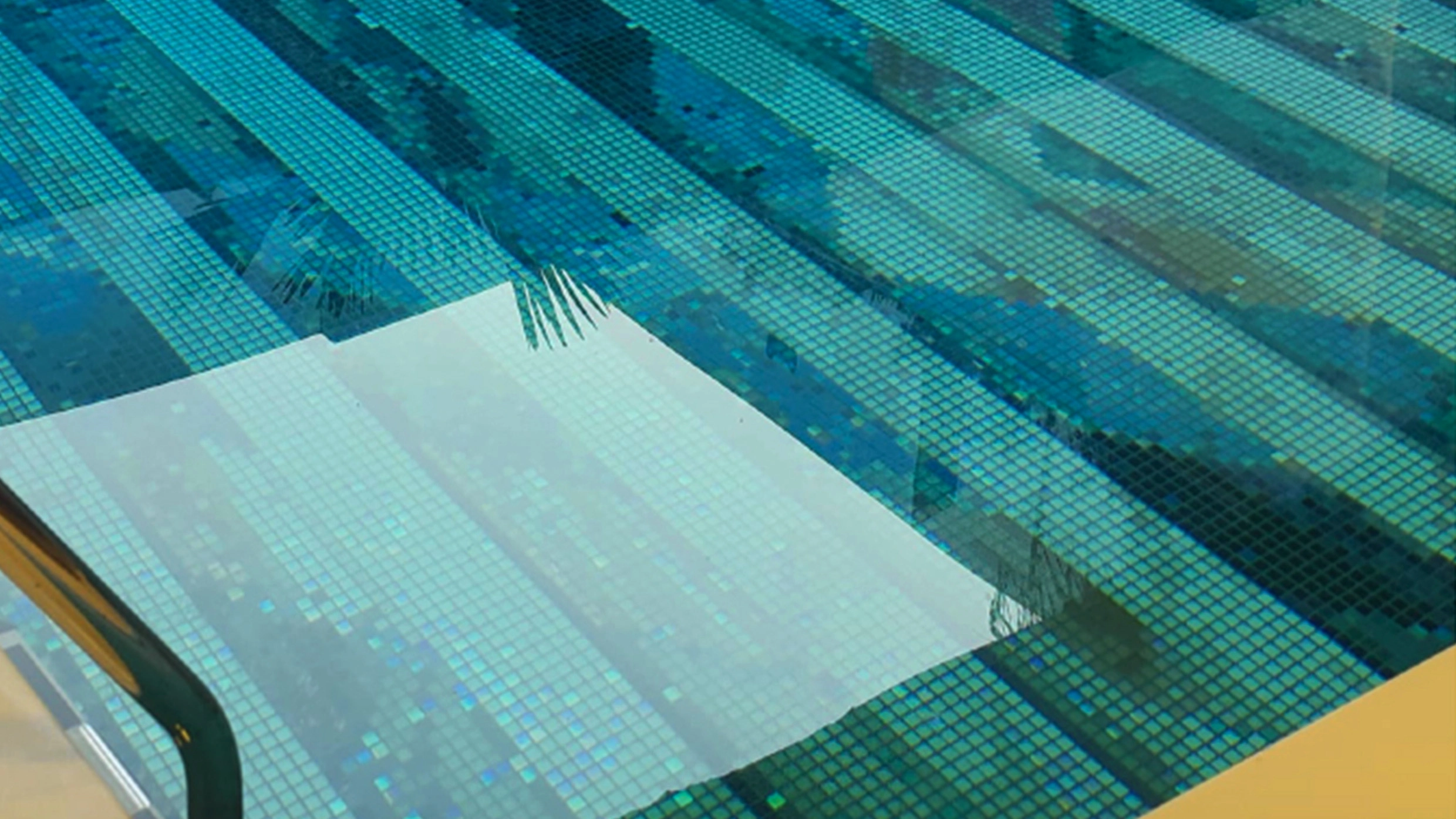
A pool that reads as a work of art from the terrace also needs to function well for swimmers. The mosaic pattern can affect how the water looks from different angles, but it also influences how the pool feels. Darker tiles absorb heat and can warm the water, while lighter tiles keep it cooler. Iridescent tiles can create glare on bright days, which may bother some swimmers. These are not design flaws; they are trade-offs that need to be weighed during the planning phase.
The depth of the pool also plays a role in how the mosaic pattern is perceived. Shallow water amplifies the tile colors, while deeper water mutes them. A pattern that looks vibrant on a sample board may appear washed out in a four-meter-deep pool. That is why experienced designers create mock-ups, either digitally or with physical samples submerged in water, before committing to a layout. The goal is to ensure that the final result matches the client's vision.
Maintenance Realities
No matter how beautiful the mosaic, a pool requires regular care. Glass tiles are non-porous and resist staining, but they can show water spots and calcium deposits more readily than ceramic. Ceramic tiles, especially matte finishes, hide deposits better but can absorb minerals over time if the water chemistry is off. Grout lines, regardless of tile type, are the most vulnerable part of the installation. Using epoxy grout instead of cement-based grout significantly extends the life of the mosaic, but it is more expensive and harder to install. For a private aquatic masterpieces, the investment in premium grout is often worth it.
The water chemistry itself must be managed carefully. High chlorine levels can degrade some tile pigments, especially in cheaper products. Brands like Bisazza and Sicis design their tiles to withstand standard pool chemicals, but even they recommend maintaining a pH balance between 7.2 and 7.6. Saltwater systems are gentler on tiles but can be harder on the grout. Each system has its pros and cons, and the choice should be made with the specific tile material in mind.

Bringing It All Together
Creating a pool that qualifies as a private aquatic masterpiece is not about picking the most expensive tile. It is about understanding how materials, light, water, and use interact over time. The brands mentioned here, from Bertazzon Mosaico to Porcelanosa, from Mozaico to Cedit Ceramiche, each offer something distinct. The art lies in selecting the right combination for a specific site and then executing the installation with precision. That is what separates a well-done pool from a truly memorable one.
In a city like Dubai, where the landscape changes fast and the expectations are high, the pool has become one of the most personal spaces in a home. It is a place to relax, to entertain, and to reflect. With the right materials and craftsmanship, it can also be a canvas for something lasting. That is the promise of a true aquatic masterpiece.